

A wired nurse call system is the original, battle-tested architecture for patient-to-nurse communication. Using dedicated two-wire bus cabling, it connects bedside units, corridor lights, duty room terminals, and the master station into a closed, interference-free circuit. For hospitals where absolute signal reliability is non-negotiable, wired remains the gold standard.
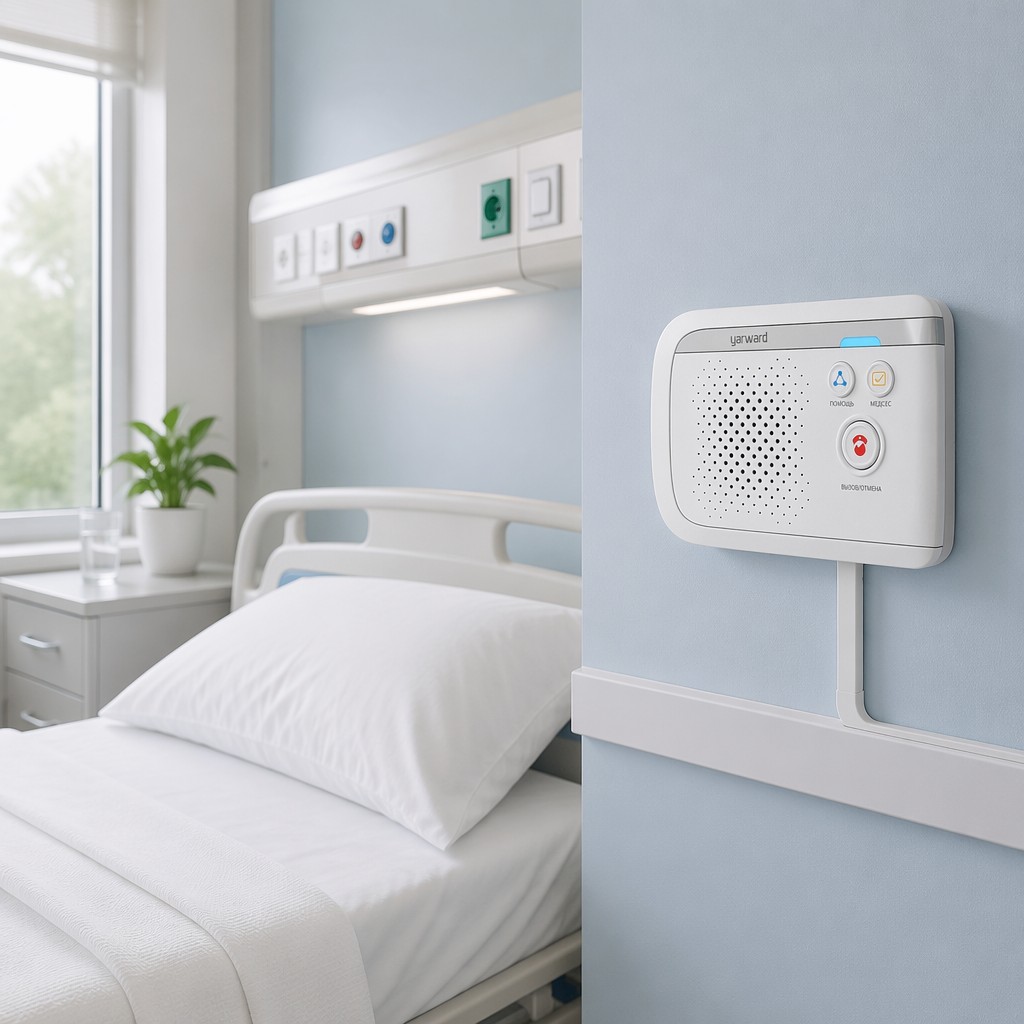
In this guide, we examine how wired nurse call technology works, where it outperforms wireless and IP alternatives, and how to evaluate whether a wired system is the right fit for your facility.
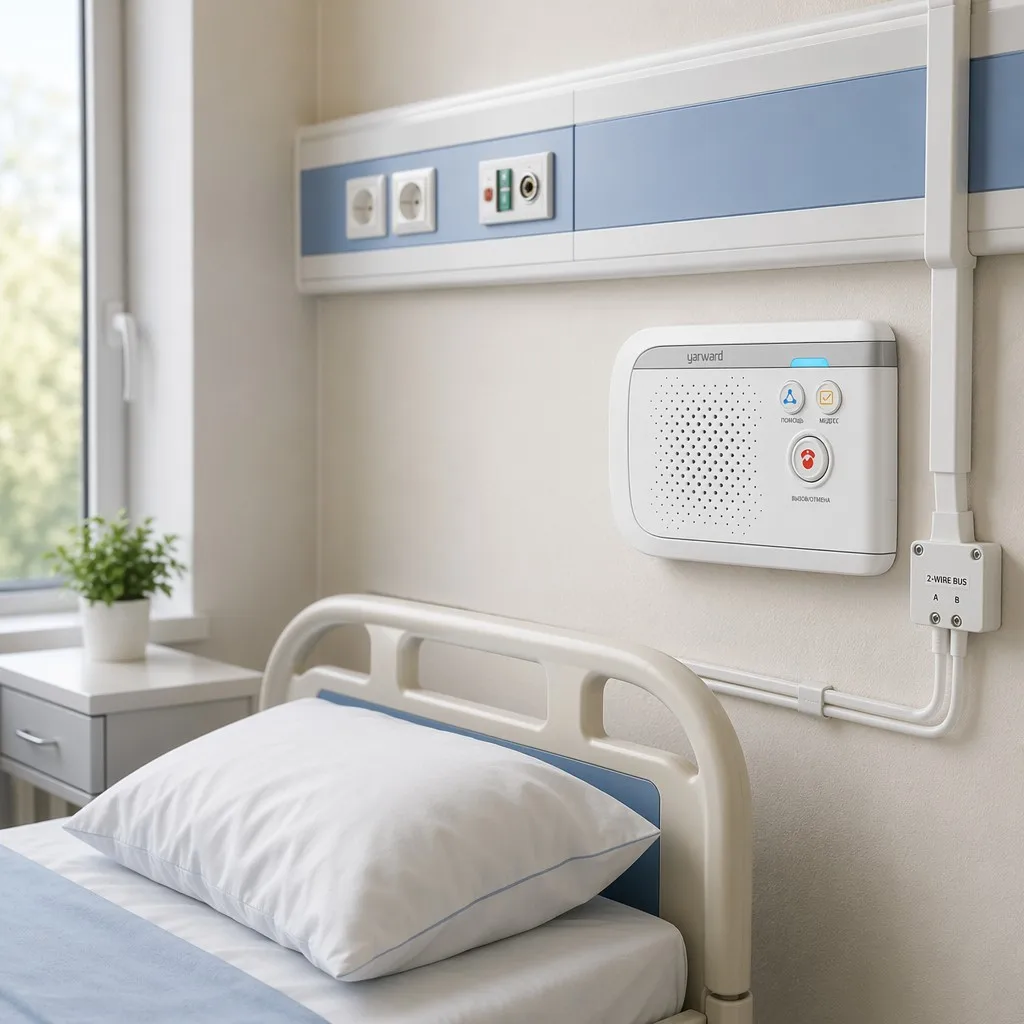
How a Wired Nurse Call System Works
The architecture is elegantly simple. A two-wire bus runs through the hospital wing, connecting every device in parallel: bedside terminals in patient rooms, corridor display lights outside each door, duty room consoles at nursing stations, and the central master station. The two wires carry power, data, and audio simultaneously — no separate power supply, no data cables, no wireless frequencies to manage.
When a patient presses the call button, the bedside unit sends a coded signal down the bus. The master station decodes it, identifies the calling room, and routes the alert: illuminating the corridor light outside that room, sounding an alert at the nursing station, and establishing a two-way voice channel so the nurse can speak with the patient before walking to the room.
Why Wired Still Matters in 2026
In an era of wireless everything and IP-based smart hospitals, the wired nurse call system persists for one reason: it is the most reliable architecture ever built for patient communication. Here is why:
| Advantage | What It Means |
|---|---|
| Zero RF interference | No frequency conflicts with hospital Wi-Fi, Bluetooth, telemetry, or mobile devices. In radiology suites and MRI-adjacent wards where RF is restricted, wired is the only viable option. |
| Power over bus | Bedside units, corridor lights, and duty terminals draw power directly from the two-wire bus. No batteries to replace, no separate power outlets needed at each device. |
| Proven in critical environments | Wired nurse call has been deployed in hospitals for over 40 years. The failure modes are known, the maintenance procedures are mature, and the technology is understood by every biomedical engineering team. |
| Lowest long-term maintenance | No batteries, no firmware updates, no network configuration. Once installed and tested, a wired system runs for years with minimal intervention. |
| Physical security | A closed circuit is immune to network-based attacks. No IP addresses to scan, no wireless signals to intercept. For hospitals with strict cybersecurity requirements, this matters. |
Core Components of a Wired Nurse Call System
Bedside Terminal
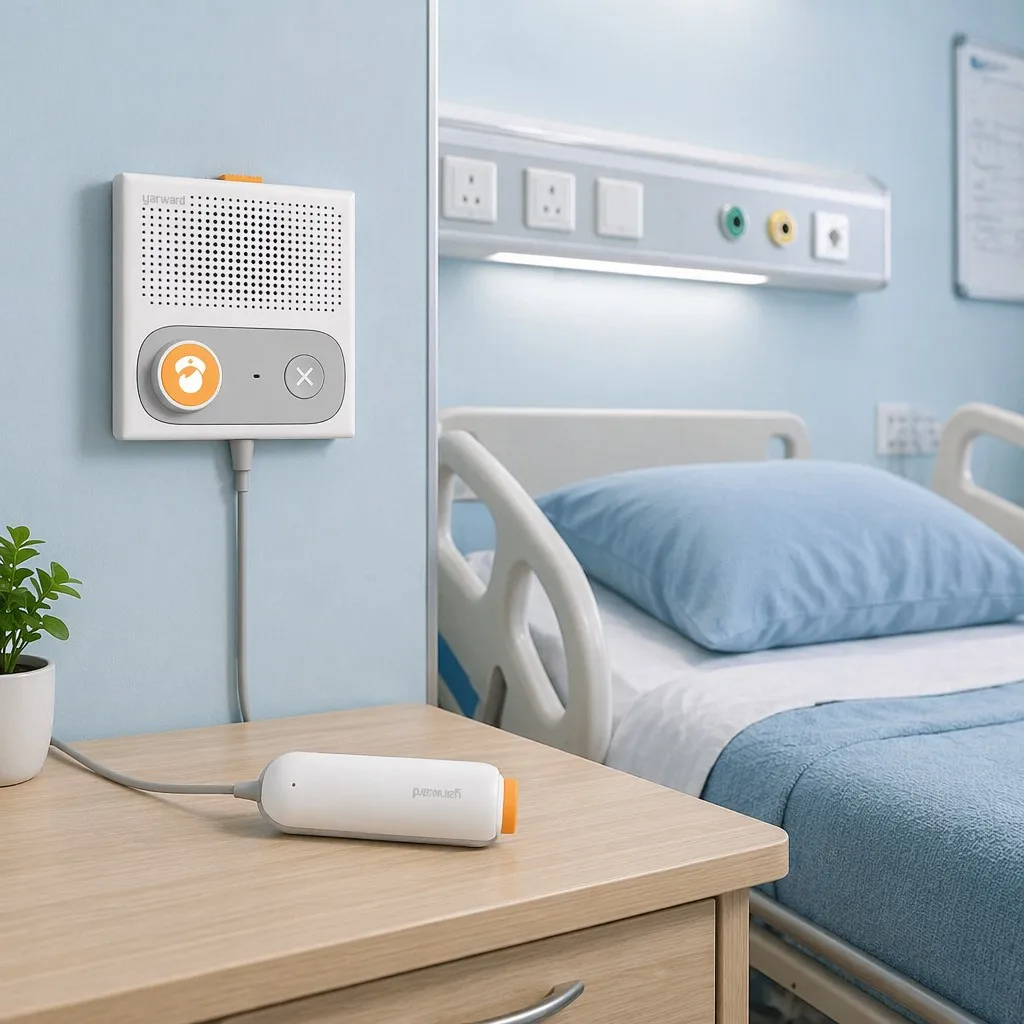
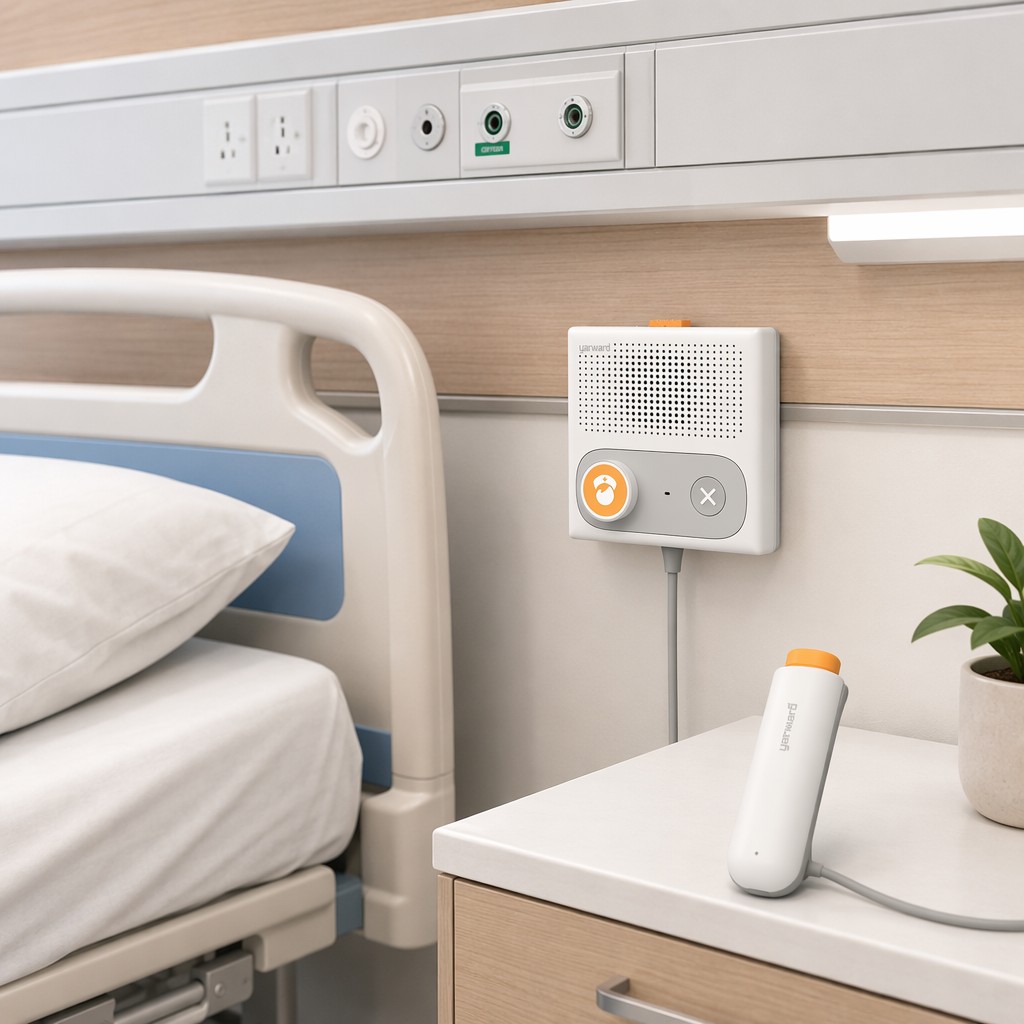
The patient interface. A wall-mounted unit beside the bed with clearly labeled buttons: Call/Cancel, Nurse, and often a dedicated Help or Emergency button. The unit includes a speaker and microphone for two-way voice communication with the nursing station. In Yarward wired systems, the bedside terminal also supports an optional handheld pendant — giving bed-bound patients a call button they can hold, rather than reaching for the wall.
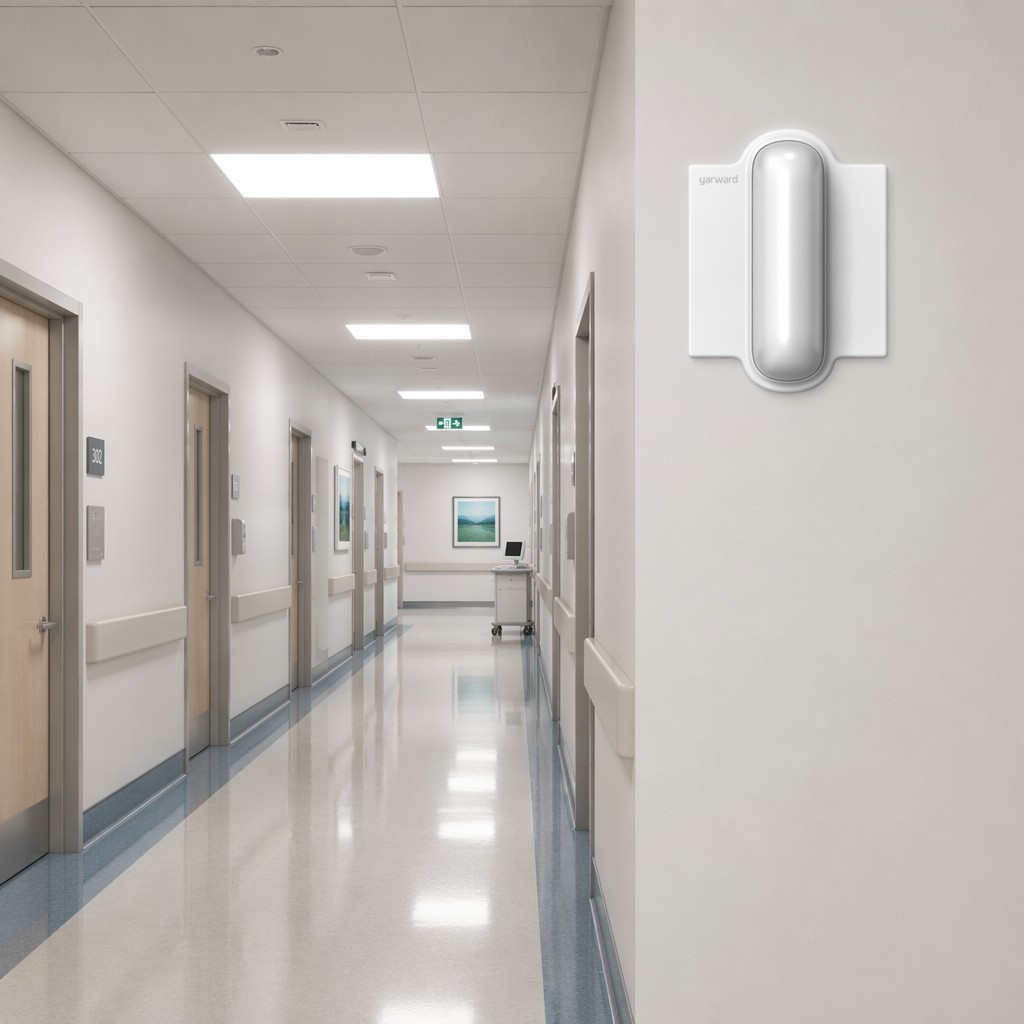
Corridor Light & Display
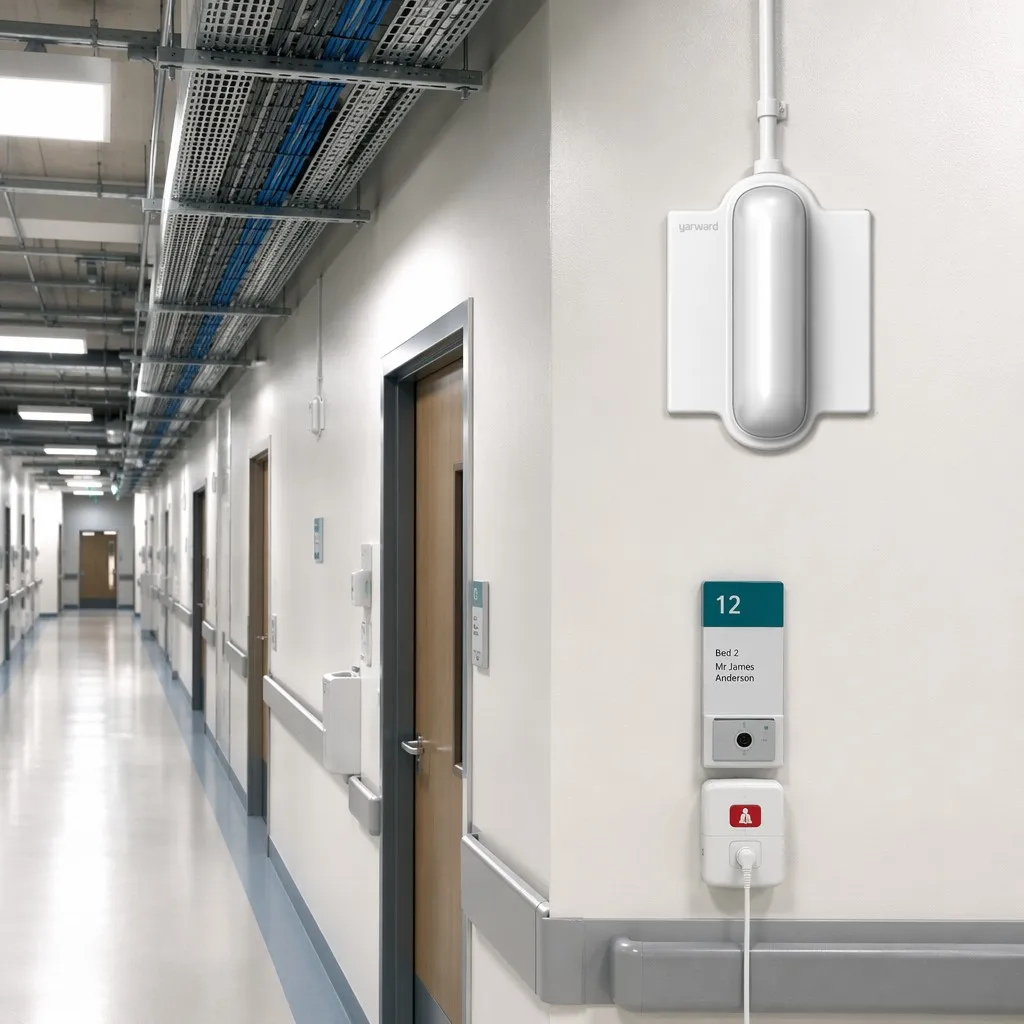
When a patient calls, the corridor light outside their room illuminates — a universal visual signal that any staff member in the hallway can see. More advanced corridor displays add a digital readout showing the room number and call priority.
Duty Room & Nursing Station Terminal
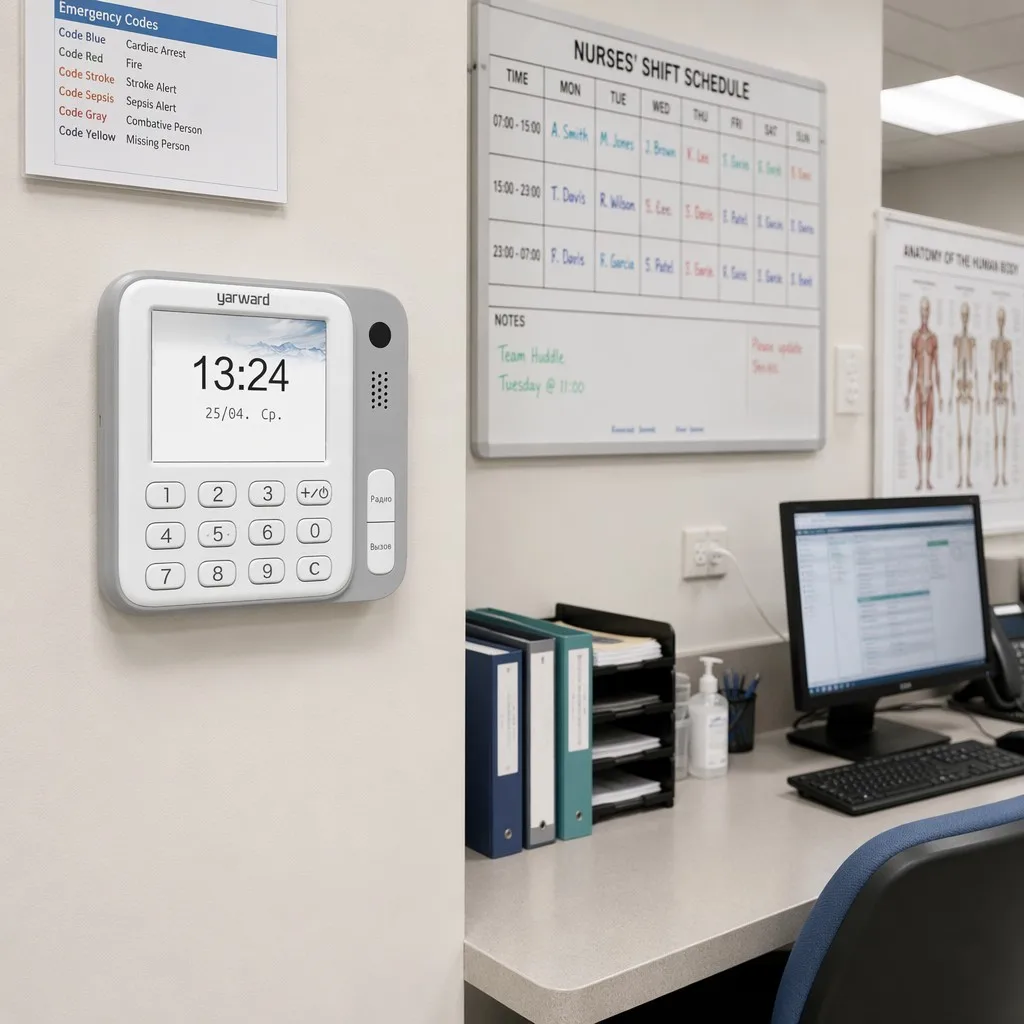
The duty room terminal is the staff-facing console. It displays the calling room number, supports two-way voice intercom, and allows the nurse to cancel or escalate calls. In larger deployments, multiple duty terminals can be deployed across different nursing stations, all on the same wired bus.
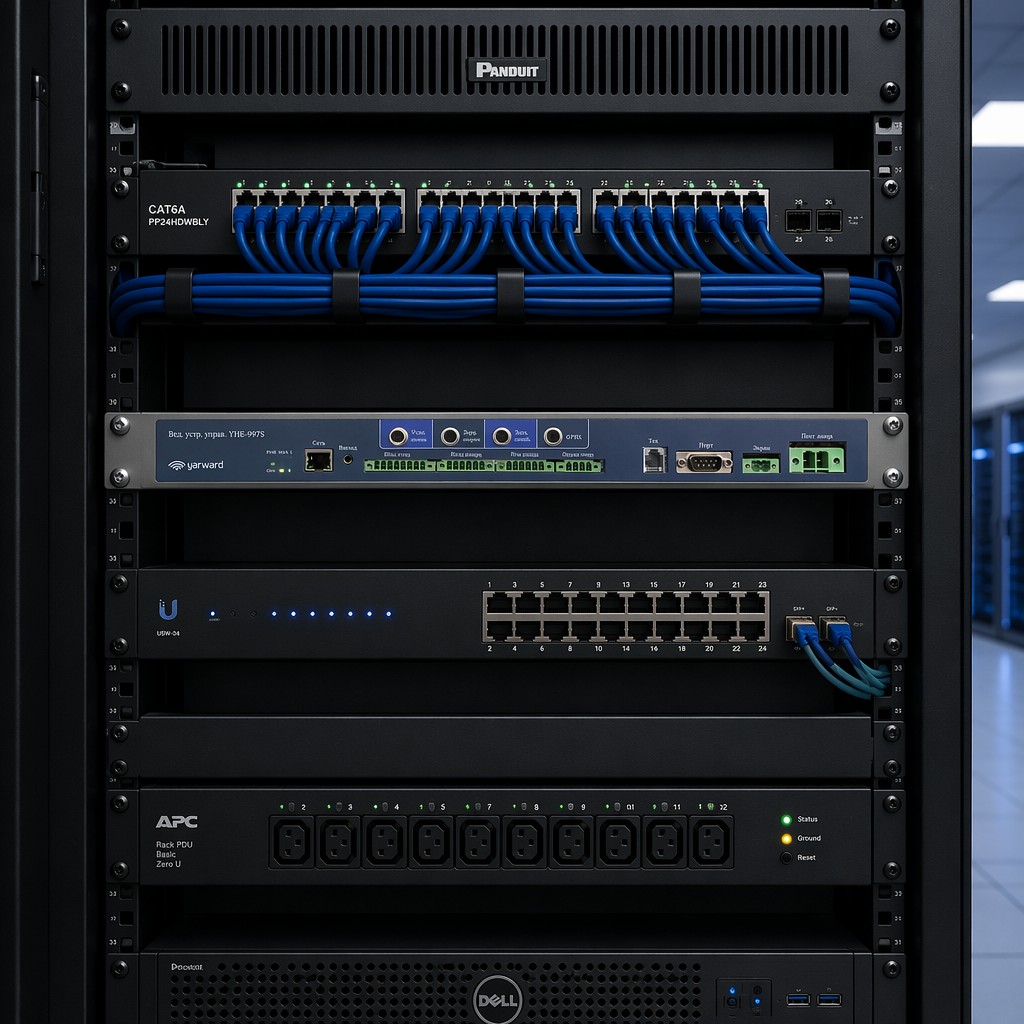
Master Station / Communication Host
The central controller. It manages call routing, maintains the call log, and in some Yarward configurations, bridges the wired nurse call system with an IP network for remote monitoring and data export. The master station is typically a 1U rack-mount device installed in the hospital’s equipment room.
Wired vs. Wireless: When to Choose Each
| Scenario | Best Choice | Why |
|---|---|---|
| New hospital construction | Wired | Plan the two-wire bus during the build. Zero RF interference, zero batteries, decades of reliability. |
| Existing hospital retrofit | Wireless | Cannot pull cable through occupied wards. Wireless installs over a weekend without disruption. |
| Radiology / MRI suite | Wired | RF-restricted environments. Wireless signals are not permitted; wired is the only compliant option. |
| Nursing home / Assisted living | Wireless | Residents need wearable pendants. Fixed bedside units alone are insufficient for mobile residents. |
| ICU / Critical care | IP or Wired | Wired for absolute reliability; IP if HIS integration and patient data display are required. |
| Temporary field facility | Wireless | Fast deployment, no infrastructure, pack up and move. |
5 Questions to Ask Before Choosing a Wired Nurse Call System
- Is this new construction or a retrofit? If the walls are open, wire the nurse call bus now — it costs a fraction of what a retrofit would.
- Do you have RF-restricted zones? Radiology, MRI suites, and some laboratories prohibit wireless transmissions. Wired is the only compliant nurse call option in these areas.
- What is your maintenance philosophy? If you want a system you install once and largely forget about, wired has the lowest ongoing maintenance burden of any nurse call technology.
- Do you need wearable call devices? Wired systems are inherently fixed-location. If your residents need to call from anywhere — bathroom, common area, garden — you need wireless pendants, which a wired system cannot provide.
- What is your cybersecurity posture? If your hospital’s IT security policy restricts network-connected medical devices, a closed-circuit wired system eliminates that attack surface entirely.
Why Yarward Wired Nurse Call Systems?
Yarward has been designing and manufacturing wired nurse call systems since 1998. Our two-wire bus technology integrates power, data, and audio on a single cable pair — reducing installation complexity and material cost compared to multi-cable alternatives. Key features include:
- Two-wire bus with integrated power, data, and audio — no separate power supplies at each bedside unit
- Two-way voice intercom — nurse can speak with patient before walking to the room
- Modular expansion — add bedside units and corridor lights without replacing the master station
- Hybrid-ready — Yarward wired systems can bridge to IP networks for remote monitoring and data export
- CE and FCC certified — manufactured in ISO 9001 facilities
Browse wired nurse call systems → or contact us for a facility assessment.
Frequently Asked Questions
How many devices can a single two-wire bus support?
Yarward wired nurse call systems support up to 200 bedside terminals, corridor lights, and duty room consoles on a single bus segment. For larger deployments, multiple bus segments can be connected to a single master station.
Can a wired system be expanded after installation?
Yes. Because all devices connect in parallel to the two-wire bus, adding a new bedside unit or corridor light is a matter of connecting to the nearest bus access point. No changes to the master station are required for expansion up to the bus capacity.
What happens if the two-wire bus is damaged?
The bus carries low-voltage power and data. A physical cut will disable devices downstream of the break, but devices upstream continue to operate. Yarward systems include bus monitoring that alerts the master station to a break, identifying the affected segment. Repairs involve splicing the two-wire cable — a standard maintenance procedure.
Can wired and wireless nurse call coexist in the same facility?
Yes. Yarward supports hybrid deployments: wired in radiology and ICU for reliability, wireless in general wards for flexibility — all managed from a single master station.
Post time: 07-20-2026