

Extreme pressure has been put on the system due to the patient treatment efforts of COVID-19. According to Patricia Covelle, an associate chief nursing officer at Beverly Hospital, an urban facility and a member of Beth Israel Lahey Health System, just outside Boston. “The novel coronavirus attacks the lungs of infected patients, resulting in extraordinary usage of oxygen within the hospital,” she says.
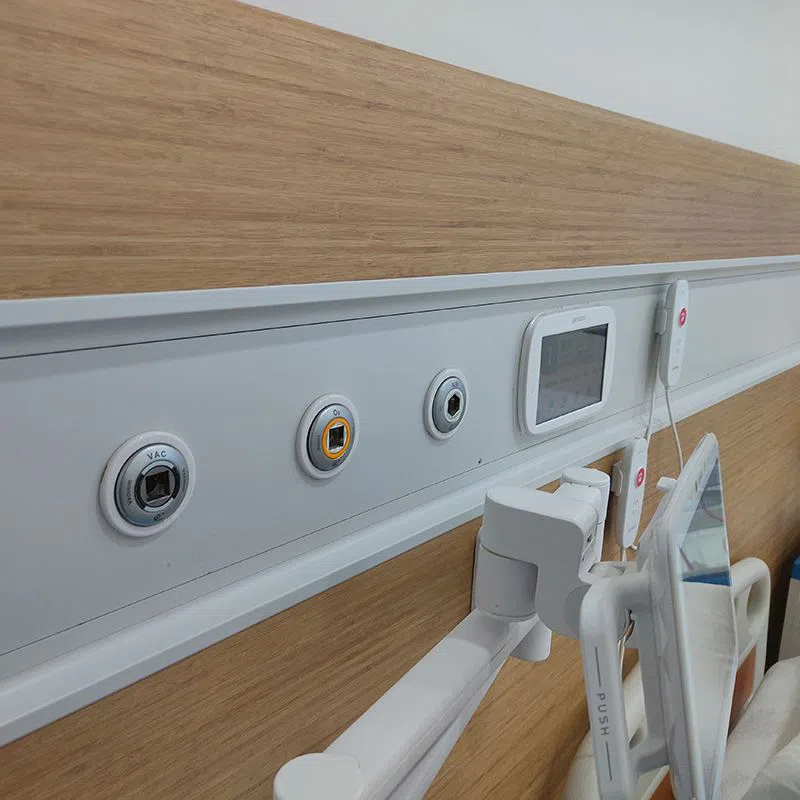
Fortunately, the supply of medical oxygen to hospitals is not currently a concern. Rich Gottwald, the president and CEO of the Compressed Gas Association (CGA), says, “There is no shortage of medical oxygen, nor do we anticipate any shortage.” That is partly because companies such as Airgas USA LLC, Linde plc, and Air Products have ramped up production and shifted capacity to serve the most hard-hit areas of the country, he says. The concern is hospital bulk medical oxygen systems may not be sized for the COVID 19 pandemic demand.
Yarward Nurse Call system can be designed for ease of use, and built to withstand the demands of the busiest care environment.
CGA also encouraged gas customers to understand the facility’s oxygen supply system maximum operating capacity, considering tank volume, vaporizer capacity, and in-house piping flow limits. An unprecedented increase in medical oxygen demand (the number of patients needing oxygen above-normal conditions) under certain circumstances can lead to the shutdown of the hospital’s oxygen delivery system as a whole due to an inability of the hospital’s system to process the required oxygen.
Related to a potential accumulation of ice, systems constructed to the National Fire Protection Association's NFPA 99, Health Care Facilities Code, are designed to vaporize cryogenic (super-cooled) liquid oxygen from the storage vessel(s) using finned aluminum exchangers called ambient vaporizers.
This process occurs in the aluminum coils known as the ambient air vaporizers. Once the liquid oxygen is converted to oxygen gas, the pressure of the gas is pushed throughout the hospital into lines feeding medical oxygen connection ports inpatient unit headwalls.
By design, the ambient vaporizers will accumulate a small amount of ice at the inlet, while delivering gas near ambient temperatures on the outlet. However, when flows significantly exceed design rates, the ice further accumulates on the vaporizer fins, resulting in less surface area for heat exchange. This drives the delivered oxygen temperatures lower to the point where frost and condensation form on the hospital line, posing risks to the safe operation of the hospital oxygen equipment.
Another limiting factor for the supply system is the capacity of the pressure regulators that deliver the constant pressure during normal operation. These regulators have a fixed-flow capacity, and when it is exceeded, they are not able to maintain the desired pressure.
This will drop the actual pressure in the hospital network possibly setting off alarms and potentially disrupting the operation at the patient use points. There is a critical point in which safe operation of the system will reach its ultimate limit and could cause a shutdown of the entire bulk medical oxygen system.
To understand this further, facilities professionals should consult the “Additional Ventilators May Pose a Risk to Hospital Gas Systems” guidance document published by the American Association for Respiratory Care.
Post time: 08-22-2022